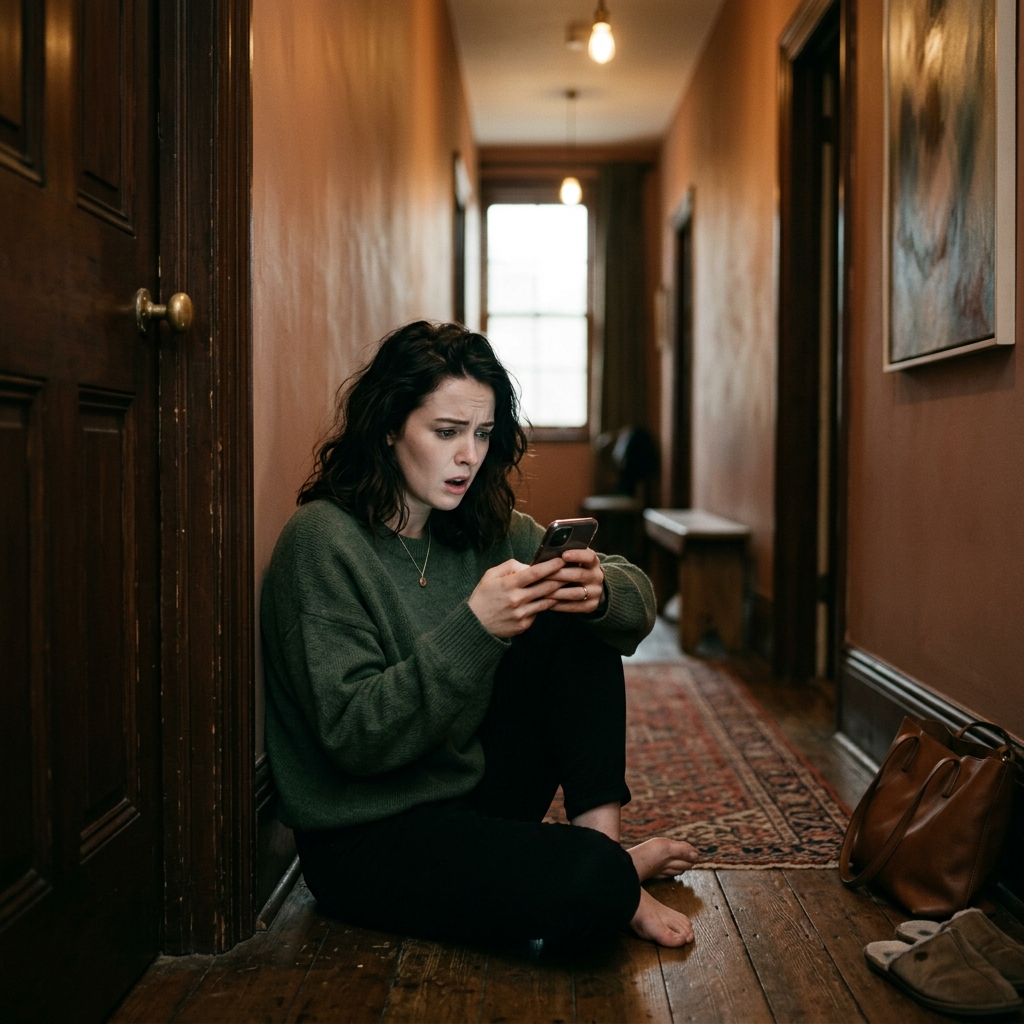
My laptop had died that evening, and I had a work deadline. Greg was asleep. Borrowing his laptop wasn't snooping — we'd shared passwords for years, or so I believed. I opened the browser, started typing the address of my email provider, and the autofill dropped down with an account I had never seen before.
An email address with his initials and a string of numbers. Not his work account. Not the account we used for bills. Something else entirely. Something that didn't belong to any version of our life together that I recognized.
The Rabbit Hole
I want to be honest: I could have closed the laptop. Fourteen years of marriage says you trust the person sleeping upstairs. But fourteen years of marriage is also exactly why my hands went cold when I saw that address — because I knew every corner of our life together, and this account belonged to none of them.
The password was saved. The inbox opened. Dating site confirmations. Receipts for a credit card I didn't know existed. Hotel bookings in our own city, always on nights he'd said he was traveling for work. The oldest email was six years old.
Six years. Almost half our marriage had been running on two tracks — the one I lived in, and the one he kept in that inbox. I scrolled and scrolled, half expecting something to explain it — a misunderstanding, a mistake, something that would make this make sense. But every page loaded more of the same. He had been meticulous. Organized, even. Receipts, confirmations, photos that had no business being in my marriage.
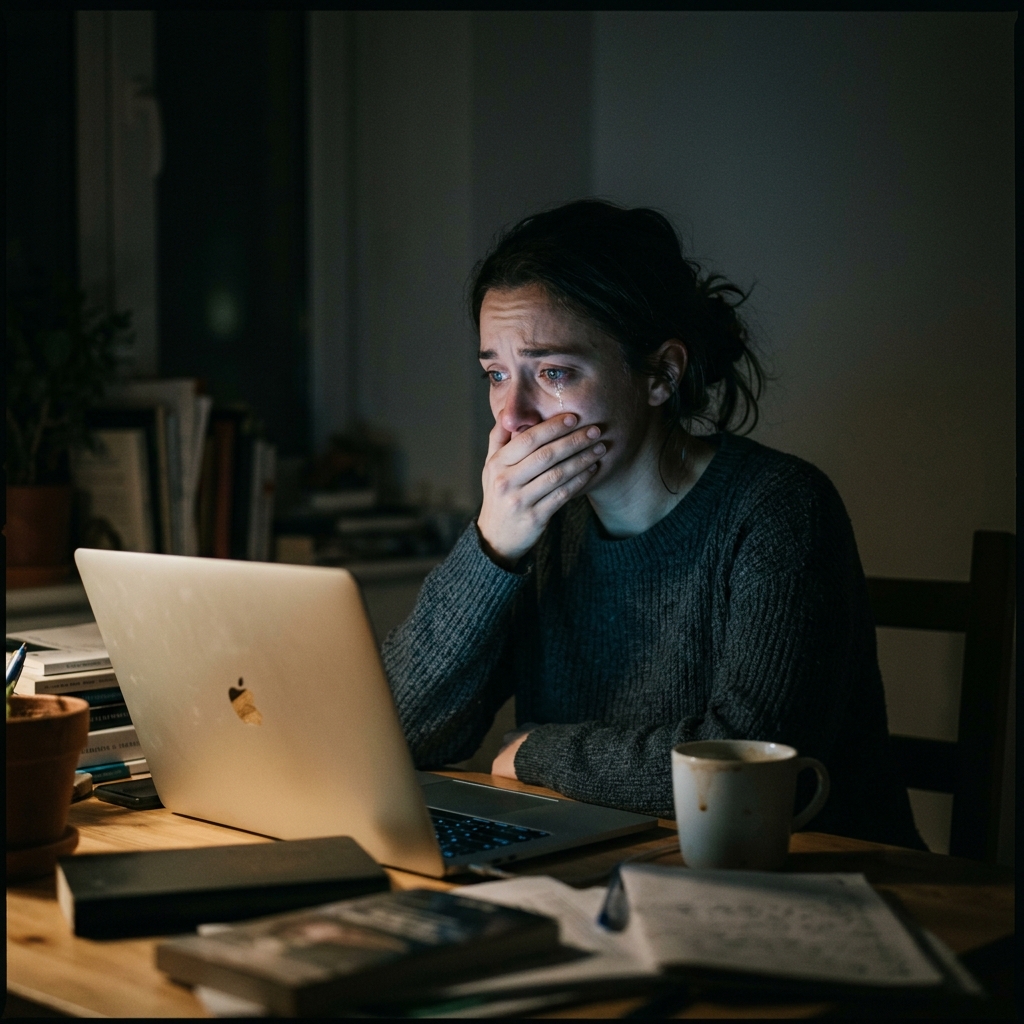
I remember noticing the rain outside. I remember the kitchen clock ticking. I remember my tea going completely cold in my hands because I couldn't stop reading long enough to take a sip. At some point I realized I had been sitting there for three hours.
The Longest Night
I didn't wake him up. That was a deliberate choice, though at the time it felt more like paralysis. I forwarded the most important emails to my own account — the receipts, the hotel bookings, two emails that made it absolutely clear who and what this was — and then I closed the laptop and set it exactly where I'd found it.
I sat in the kitchen until sunrise. Not crying, not raging — just sitting, like someone had taken all the furniture out of the inside of my chest and I hadn't worked out yet what to put there instead.
I thought about our first apartment, a tiny place in the city that smelled like old radiators. I thought about the trip we took to Portugal for our anniversary, the way he'd surprised me with dinner on a rooftop overlooking the river. I thought about ten thousand small, ordinary moments — coffee mugs and grocery runs and Sunday mornings — and I tried to figure out which ones had been real.
Most of them had been real, I think. That's the thing nobody tells you. The ordinary life was real. It's just that it wasn't the whole life. And you can't unknow that.
What I Did Next
In the morning I told him my laptop had died and I'd borrowed his. I watched his face do something complicated — a flicker of something that passed too quickly for me to name — and then I said the only sentence I'd prepared all night: "I found the account. Don't explain. Just tell me if it's real."
He sat down at the kitchen table and put his head in his hands.
That was the whole answer.
We tried counseling — one session. He spent most of it explaining why it wasn't technically lying. That, more than the emails, told me who I was married to. A person who is genuinely remorseful doesn't spend a counseling session constructing a defense. I filed for divorce that spring.
The Part That Took the Longest to Process
People assume the hardest part was finding out. It wasn't. The hardest part was the six months afterward when I kept replaying ordinary moments and trying to figure out what he had been thinking behind his eyes.
Had he felt guilty sitting across from me at dinner? Had he felt anything at all? I wanted there to be a version of the story where he had suffered too — where the weight of the secret had worn him down — because that would have meant the relationship had mattered enough to cost him something. The truth, when I finally accepted it, was that I probably would never know.
And I had to learn to be okay with not knowing. To close that door without a final answer behind it. That took longer than the divorce proceedings, longer than moving out, longer than almost anything else.
What I Wish Someone Had Told Me
Here is what I've learned, and what I'd tell anyone reading this at 2 AM with a knot in their stomach: the discovery is not the wound. The discovery is the diagnosis. The wound had been there for six years — I just finally knew its name.
You cannot heal what someone else refuses to admit exists. You cannot rebuild trust with someone who is still, even now, more focused on their own explanation than on the damage they caused. And you cannot spend the rest of your life wondering whether the person across the dinner table is showing you everything they are.
I'm two years out now. I have a job I love, a small apartment filled with exactly the things I chose, and a cat named after a city we never got to visit together. I have mornings that feel genuinely like mine.
The discovery didn't break my life. He had already done that, quietly, over six years, one hidden email at a time. The discovery just gave me back the truth — and the truth, even when it's ugly, is the only thing you can actually build on.