The fight was about my life, which meant it was about his plan for it.
I was twenty-two, in the third year of a business program at a university he'd chosen, in a city he'd approved, studying a major we'd agreed on in the way you agree on things with my father — which is to say, he presented his conclusion and I nodded, because I was twenty-two and I didn't yet have the language for the thing I actually wanted.
What I actually wanted was to cook. I'd known since I was fifteen, standing in a restaurant kitchen as a dishwasher, watching the line work and feeling, for the first time, that I was watching something I understood in my bones. But you don't tell my father that at fifteen. You wait. And by the time I was twenty-two, I'd been waiting long enough.
I told him I was dropping out. I was moving across the country. I was going to cook in restaurants and work my way up and that was the plan I should have told him about at fifteen.
He said: if you walk out that door, don't bother calling.
We were both men of our word. That was always our problem. I walked out the door. We were both too proud and too similar and too certain we were right, and so eleven years passed.
Eleven Years
Eleven Christmases. His retirement party that my sister described to me in careful, neutral language over the phone. My first restaurant — a small place, thirty-two seats, a prix fixe menu that a food critic called “confident and quietly brilliant,” which I taped to the inside of my locker and read so many times it went soft at the folds.
My mother, exhausted, carrying messages between two people who each swore they had no message to send. She was the only reason I knew he was healthy, that he still played golf badly, that he'd gotten a dog and named it something I was not expecting. She never pushed. She just kept the line open.
I didn't reach out. He didn't reach out. Eleven years of practiced silence, the kind that becomes its own structure, its own architecture — something you have to actively maintain or it collapses.
The Diagnosis
When the doctors found the tumor, I told almost no one. It was wrapped somewhere it shouldn't be — benign, they suspected, but the only way to be certain was to go in and look, which required opening my skull in a careful and specific way that I tried not to think about too directly.
I didn't tell anyone because of a strange superstition: if I said it out loud, it became bigger than I could manage. As long as I kept it between me and my doctors and my wife and the pre-op forms, it stayed a manageable size.
My sister found out because she called while I was filling out the pre-op consent forms and I've never once successfully lied to her. She cried. I told her not to tell anyone. She said okay.
The surgery took six hours. I know this because the nurses kept telling me afterward, in the careful, reassuring way that people repeat safe facts around a hospital bed when they don't know what else to say.
The Shape in the Chair
When the anesthesia finally let go of me — which takes longer than you'd think, a slow gravity pulling you back to the surface from somewhere very deep — the room was dim. Afternoon light, I think. Or early evening. The clock on the wall said something I couldn't read yet.
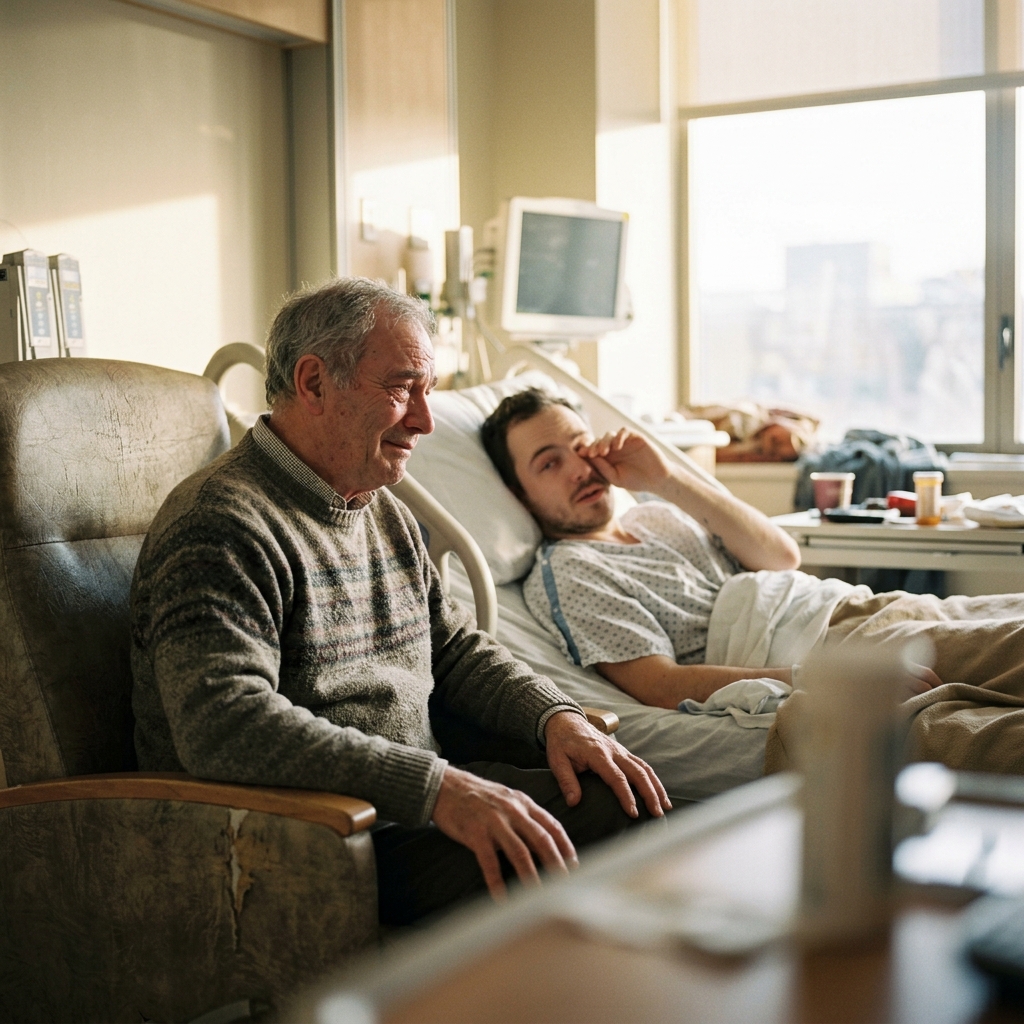
There was a shape in the chair by the window. I assumed it was a nurse, or my wife, or some combination of both in my still-clouded perception. Then the shape leaned forward into the light.
It was my father. He was holding his reading glasses in one hand — not wearing them, just holding them, the way he does when he doesn't know what to do with his hands. He looked older than the math said he should. He looked like someone who had driven a long way and then sat very still for a long time.
He looked at me. I looked at him. We were both silent for what felt like a very long time.
What he said first was not I'm sorry. He said: "Your sister told me. Don't be angry with her."
I wasn't. I'm not sure I was capable of being angry at that particular moment, with my skull recently reassembled and whatever had been pressing on things no longer pressing. I just looked at him.
He said, after a silence that lasted probably thirty seconds and eleven years: "I read about your restaurant. In the paper. The review. I kept the article."
How We Talk Now
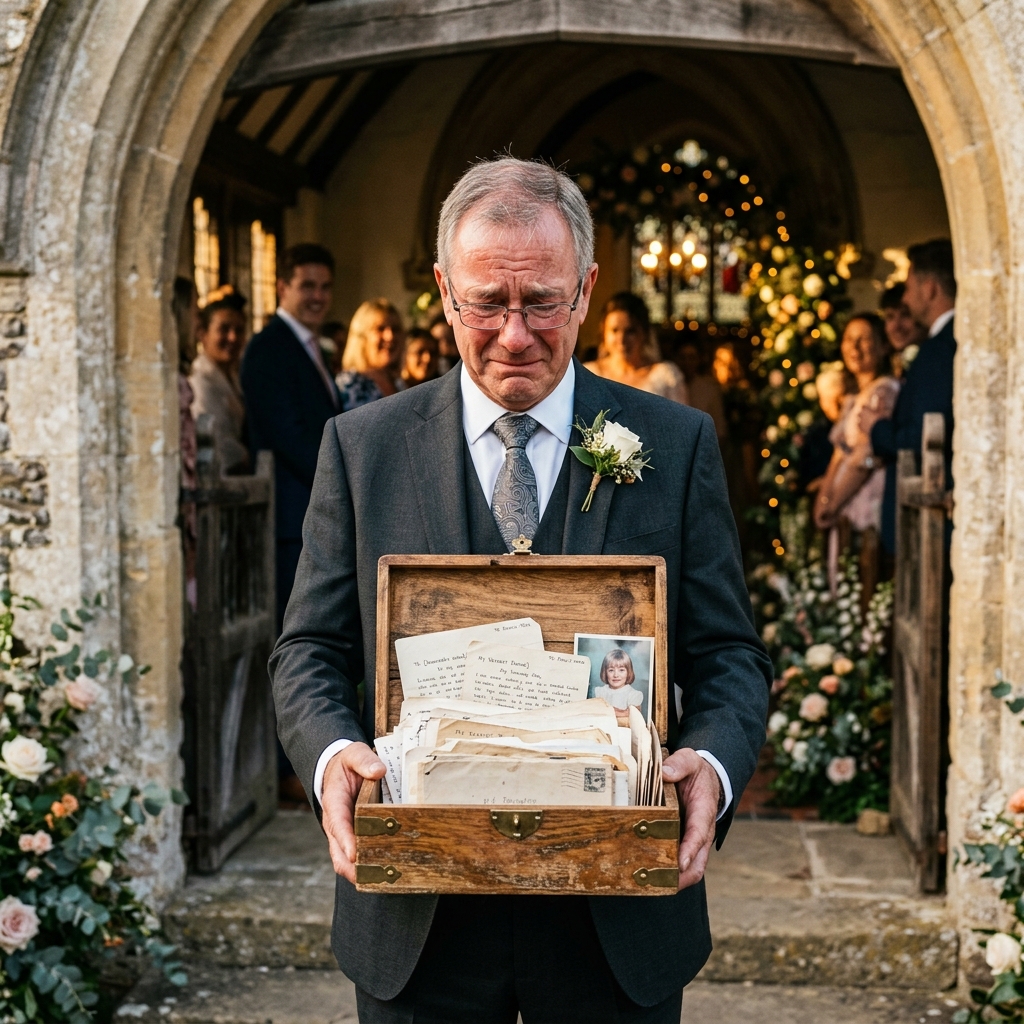
He'd kept the article. That was the thing I couldn't quite hold in my head at first. He had, it turned out, kept all of them — there was a folder at his house, he told me eventually, with every review, every mention in print, printed out and dated. The whole time. The whole eleven years of swearing to everyone including himself that he had no son in the restaurant business, no son on the West Coast, no son to speak of.
Pride is a disease with a very specific symptom: you keep the folder, and you never make the call.
He stayed four days. We didn't excavate everything — we haven't touched most of it, and maybe we never will. Some of what happened in those eleven years is probably best left in the drawer it's been keeping. Mostly he asked questions about the restaurant — specific questions, the kind that meant he'd actually read what he'd been collecting — and I answered them, and we let the small conversation stand in for the big one, the way men of our particular construction have always done.
The tumor was benign. The recovery took six weeks. He calls every Sunday now, at four in the afternoon, so reliably that my wife has started timing the roast by it.
We lost eleven years to one conversation neither of us would start. And it took a surgeon opening my skull for us to finally open anything else.
If you have a folder and no phone call: make the call. Don't wait for the hospital to do it for you. I promise the folder will still be there when you're done.